DISCOVERY / A Journey Through Star Trek - Part 2
Updated: Sep 30, 2024

creativedirection
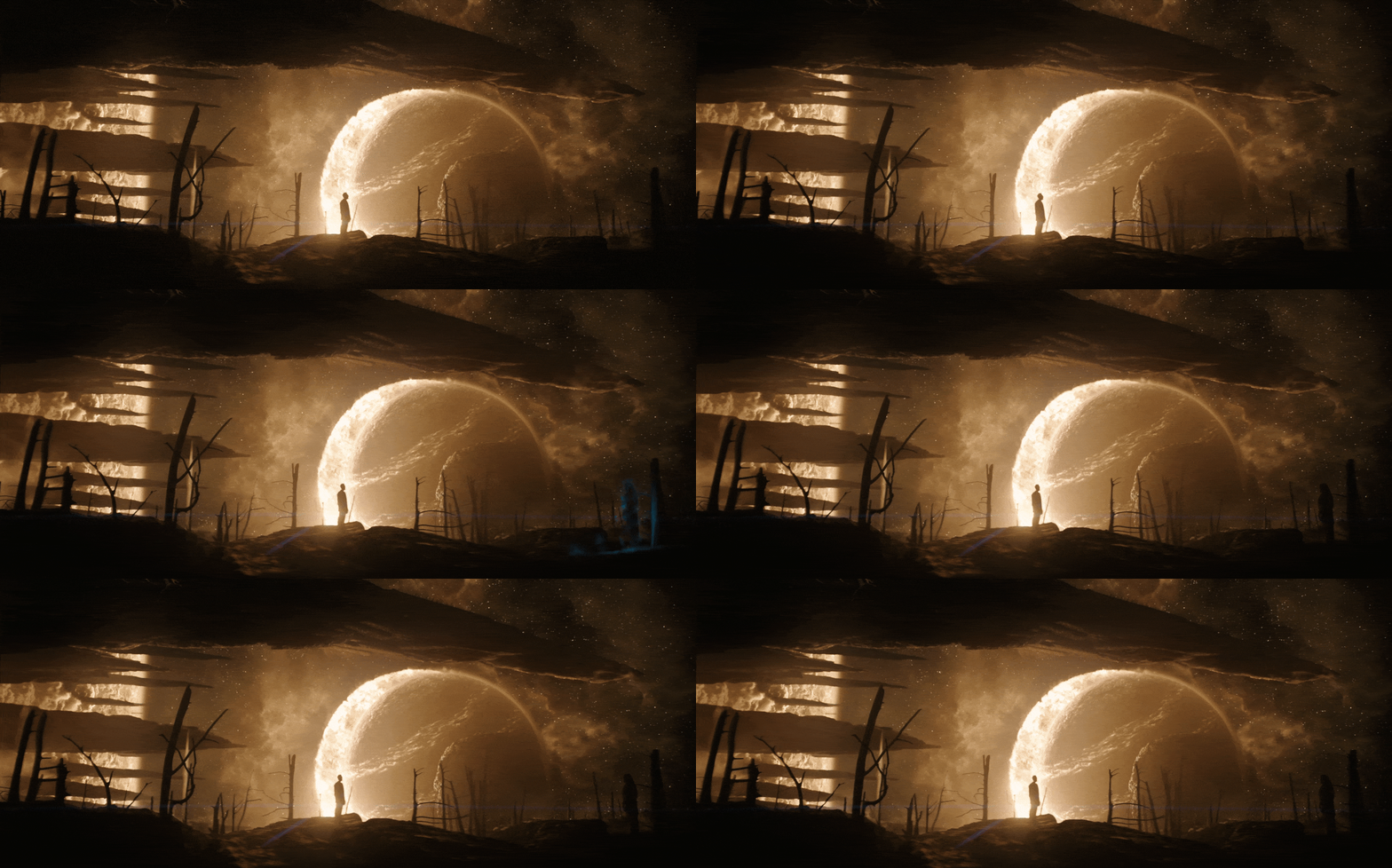
Developing this environment presented unique obstacles, particularly with regards to incorporating CLOUDS. A significant section of the environment had to be composed of animated clouds. We opted for a performance-oriented strategy, which proved to be highly effective. Waterfalls were another element that had to be considered, especially selling their scale at varying distances from camera to maintain visual quality and clarity.

technicalfacts
To create our clouds, we utilized a blend of pre-rendered VDB elements and Digital Matte Painting (DMP) support to achieve the desired look. To add motion to the clouds, we used a mix of panning & distortion in UE, giving us a subtle, yet effective result.
When working on the waterfalls, we initially tried the particle route, but quickly shifted to a 2D approach, combining multiple video elements of waterfalls until we attained the necessary look and variety. These elements were then converted into flipbooks and positioned on our pertruding rocks spires to match the original concept.
During our blend, we developed a customized Niagara particle system to match the dark, descending ash the SFX team released during our shoot.
We also scanned the practical trees built by the Art Dept. and incorporated them into our Virtual set to enhance the smooth transition between the practical and virtual environments.

creativedirection
This was the first environment we shot, and the shoot was incredibly successful. The main thing we needed to resolve was how the perspective would work. Ultimately, we placed the practical set at an angle on the stage, as it allowed for maximum coverage. It was also built in a way that it could be quickly be reversed and still work with our environment.

technicalfacts
To match some practical set elements, we added some sparks made with a Niagara particle system, which we ended up using extensively. These were set to play throughout the scene at random, but we also triggered them on cue when needed for specific setups.
We also implemented controls to smoothly fade between 2 different background warp elements, as well as being able to rotate the horizon and control the speed of the warp. Due to the strobing nature of the warp element, we would freeze the wall between takes to avoid any injuries.


creativedirection
Expanding on a familiar setting from past seasons, this presented a wonderful chance to incorporate the Trill Caves into the Virtual Production landscape. The objective was clear, incorporate bioluminescent water pools and gentle, pulsing light filtering through the cave walls. Additionally, two distinct configurations were required to align with the various narrative stages.

technicalfacts
We developed controls for adjusting the brightness, speed, and density of the bioluminescent lights seen on the walls of the cave and stalagmites. This implementation allowed us to quickly and efficiently make adjustments at the requests of the Director/DP. Subsequently, we extensively used these controls during the close-up shots to get some beautiful bokeh on our lights.
During the asset creation stage, our team designed several stalagmites and stalactites. Our models were so well-received that we shared the model files with the Art Department, which they used for practical construction and having these on set ensured a seamless blend.
On the first day of the blend, we also saw they placed candles all over the practical set, something we hadn't originally planned for. I quickly did a scan of a few candles using my iPhone and an app called PolyCam. I sent this back to the team, and the next day we had candles all over our environment to matching the practical set, alopng with the functionality to control their visibility to match the different set-ups.

creativedirection
The Disco Shuttle Bay was repurposed from Season 4. Given it's limited use this time around, there were no modifications needed. We used it twice, for different scenes including as a playback element in which it transitioned from one environment to another.
technicalfacts
We had half a day to shoot this environment, with no days to blend. The plan was to avoid shooting the floor, given its complex hexagonal pattern, but, it was of course visible in most shots.
The planet in the background also needed to rotate, for which we had control, so we quickly made those adjustments to suit the shot.


Comments